When the gas burner is clogged, there are a few simple, affordable and safe methods to return the fixture to its properly working order. Based on the radius, a new location list is generated for you to choose from.

Natural Gas To Lpg Propane Lpg Conversion Jet 102 Orifice Size 1.02Mm : Amazon.co.uk: Large Appliances
First, isobutane canisters are lighter, making it easier to carry long distances.

Which is larger gas or propane stove jets. Click to see full answer. Isobutane has two distinct advantages over propane. In general, it creates a roaring fire, which requires minimal cleanup and needs no tending.
Propane and butane the theory predicts a similar jet size for both propane and butane, which explains why either gas (and mixtures of the two) can be used without a jet change. The major difference between a propane stove and a natural gas stove is in the nozzles. This increases the flow of gas, which makes the flame bigger.
It can damage your stove, set the house on fire, and even cause death. Based on the radius, a new location list is generated for you to choose from. (that being said, you should still always remember to check the fuel levels in your.
This is because the orifice jet for natural gas is considerably larger than the one used for propane. And second, isobutane actually has more energy packed into it by volume, enabling you to cook longer with less fuel. As aforementioned, natural gas stoves have larger orifice jets than other stoves.
There (should) be two screws in the centre of the base, these keep the burners in place. Natural gas requires a ratio of around 10 to 1. Conversely, trying to use a propane appliance with natural gas will likely result in a very small flame or no burner flame at all because of the lower pressure gas and the smaller orifice.
Diesel since diesel (in simplified form) is a similar size hydrocarbon to kerosene, it should burn satisfactorily using a kerosene jet. Lpg requires an oxygen to gas ratio of approximately 25 to 1. If you, by any chance, can’t control the flame, it can burn the components of the stove.
Orifice jets for natural gas are larger than propane. Located in westboro, k1z 5m4,. Nous sommes ouverts et prêts à vous recevoir en magasin !
To achieve this difference, lpg is typically provided in a smaller quantity but at a higher pressure, drawing more oxygen with it into the burner. Natural gas is fed at a smaller pressure than propane, so to get the same heating value (usually measured in btus), a natural gas orifice has to be smaller than a propane one. This can lead to burn injuries, damage to your stove and home, and even lead to death if it caused an explosion.
Natural gas isn’t as pressurized, so the nozzles have to have larger holes. Unscrew these 2 screws and place them safely aside. Natural gas is at a lower pressure, has a lower calorific value and lower specific gravity, so changing to propane will always mean smaller injectors to get the same heat output at the burner.
Propane is highly pressurized, so the nozzles that are used have much smaller holes. A propane stove orifice size is about 0.082 inches (drill size 45), but the valve on a similar stove that uses natural gas needs an orifice that is almost 0.125 inches (drill size 35). Then, close the lid and flip the stove over so you can see the bottom.
As an example, a gas burner using a number 110 amal jet on propane at 14 water gauge (37 mbar) will probably be ok with a no. If you use propane on a natural gas stove, the flame will be too large. These screws keep the burner heads in place so don’t lose them!
The second difference is in the oxygen to gas ratio required for proper combustion. Moreover, the higher emission of propane can lead to house fires. The reason for this is because natural gas orifices are larger than propane orifices strictly because of gas service pressure.
Manufacturer, you can start by using a jet which is about 210% larger. As a result, these stoves will create more giant flames if you use propane on natural gas stoves. These can get filled with the bits of food, splatters of grease and slops of sauce that collect on a stove top.
As a rule of thumb,lpg injectors are half the size of natural gas.but its not as simple as that.propane also needs 2.5 times the volume of oxygen,therefore 2.5 times more air.many natural gas burners are not suitable for lpg as they cannot physically allow more air in,therefore incomplete combustion occurs,and the dreaded co is produced instead of co2 👉 which orifice is larger propane or natural gas grill? This suggests that you can convert a natural gas appliance to a propane one and vice versa by changing the orifice on the gas valve.
If you want to convert from one to the other, you can replace the cap on the gas valve with one that has the correct orifice, but that's only part of. Now imagine, unexpectedly big flame coming out of your stove, for which you aren’t ready, what it couldn’t do. Cooktop burners typically supply about 40,000 btus per hour.
Click to see full answer. The jets that rest beneath the burners supply the fuel to the ignition system through tiny vents.
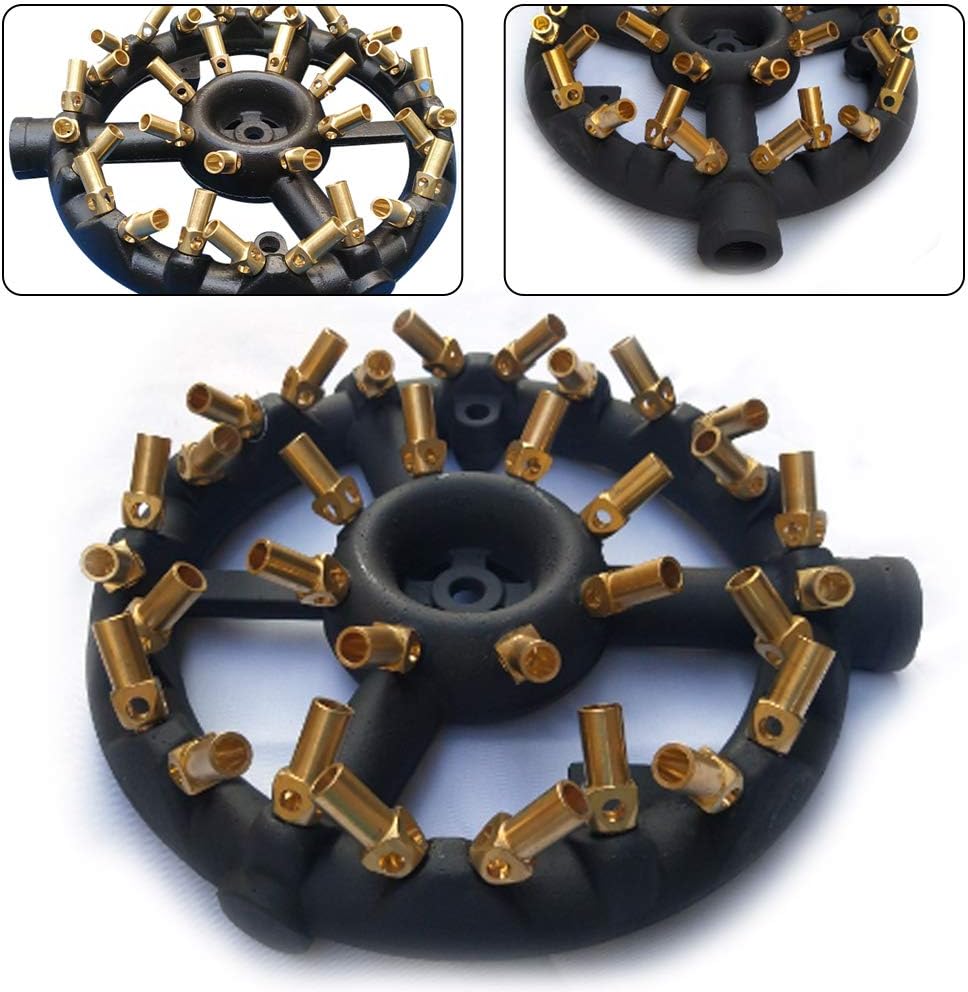
Buy Propane Gas Jet Burner For Chinese Wok Range Stir Fry Cast Iron Body Round Nozzle Jet Burner Up 80,000 Btu (32 Heads) Online In Saint Helena, Ascension And Tristan Da Cunha. B08Hn4Ss3H

What Happens If You Use Propane On A Natural Gas Stove? - Perfect Stove

Buy Propane Gas Jet Burner For Chinese Wok Range Stir Fry Cast Iron Body Round Nozzle Jet Burner Up 80,000 Btu (32 Heads) Online In Saint Helena, Ascension And Tristan Da Cunha. B08Hn4Ss3H
Business, Office & Industrial Ovens Suneducationgroup.com Set Of 5 X Tecnogas Lp Lpg Propane Gas Burner Injector Jet Kit Thread M8 X 0.75

What Does It Cost To Change A Kitchen Range From Propane To Natural Gas? - Quora