Homes in which uffi was installed many years ago are not likely to have high formaldehyde levels now. Were measured in mobile homes, with individual measurements as high as several mg/m3 in new mobile homes (2, 3).
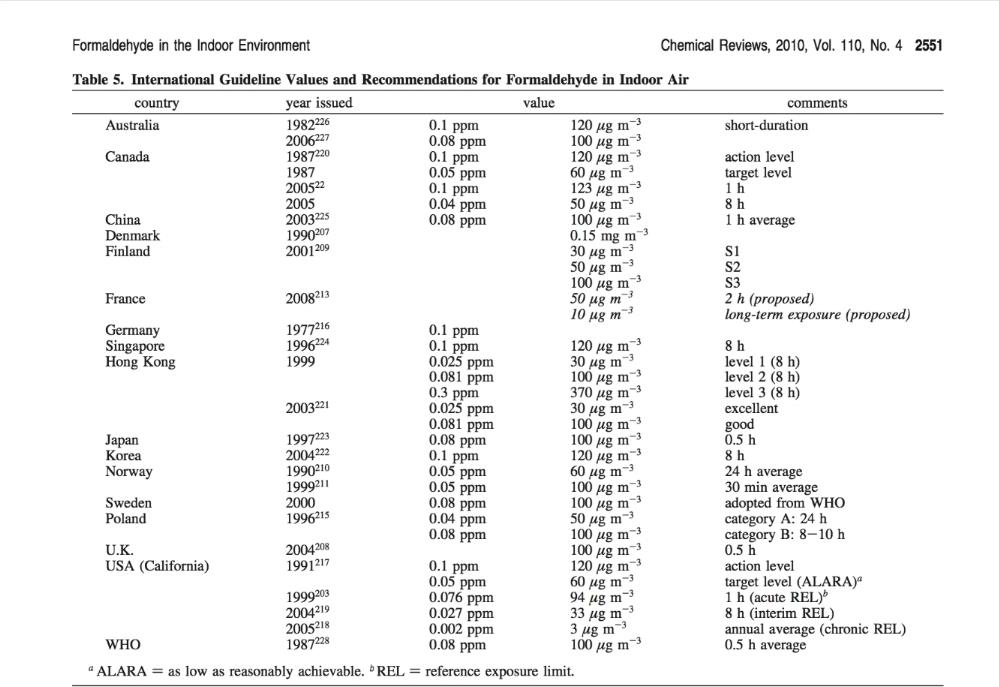
Formaldehyde Gas Hcho Exposure Limits Formaldehyde Gas (Formalin Gas) Exposure Standards & Limits In Buildings In Australia, Canada, Europe, United States, New Zealand
In severe cases, respiratory distress and swelling of the larynx and lungs may.
Acceptable formaldehyde levels in homes. Formaldehyde levels in indoor air in homes depend on a number of factors including: Now formaldehyde levels in mobile homes are typically around 100 µg/m3 or less (2). According to the centers for disease control and prevention (cdc), acute and chronic health effects from exposure to formaldehyde vary depending on individual sensitivity.
These levels are in agreement with data found in the scientific literature. The best approach to protecting yourself from the harmful effects is by limiting exposure to vocs. There is evidence that some people can.
Formaldehyde is an extensively regulated material. In one study, formaldehyde levels in homes were associated with increased risk of atopy, after ruling out confounding from other indoor air pollutants (garrett, et al., 1999).in another study,. 50 µg/m³ (or 40 ppb) based on a.
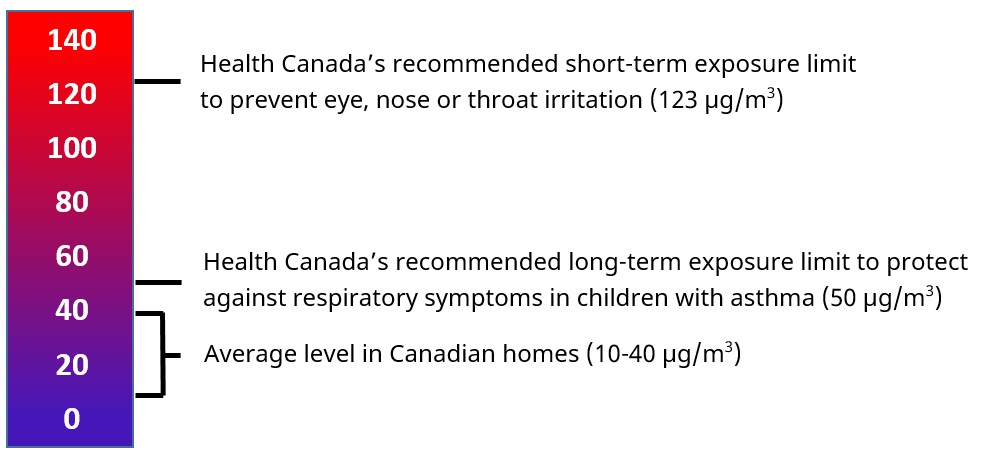
Epidemiological studies on the effects of chronic formaldehyde exposure consistently found respiratory and allergic effects at levels below 123µg/m 3 (health canada, 2005). Long story short, our voc levels tested in the severe range at 7100 ng/l. This means that most people are coming into contact with some amount of formaldehyde.
In minnesota, outdoor levels of formaldehyde average about 2.0 ppb. These data are relied upon in this review as the basis for deriving an acceptable residential indoor air exposure limit for formaldehyde (i.e., 24 hours/day, 7 days/week). What are safe voc levels?
Areas were in the range of 11 to 20 parts per billion (ppb). Greater than 0.1 percent formaldehyde and materials capable of releasing formaldehyde into the air at concentrations reaching or exceeding 0.1 ppm. Other studies show that older homes have lower formaldehyde levels than newer homes (hodgson et al., 2000;
If someone in your home smokes tobacco products, the smoke may be the greatest source of formaldehyde in your home. Consumer product safety commission found that formaldehyde is normally present indoors and outdoors at low levels, usually less than “0.03 parts of formaldehyde per million parts of air (ppm).”. On july, 2010 president obama signed a law that will limit formaldehyde levels in composite wood.
Indoor levels should be as low as possible, assuming that you cannot get indoor levels below background (outdoor levels). The number and types of sources in the home. Homes with new products or new construction.
Still today, there is a great deal of confusion regarding what are permissible levels of airborne formaldehyde in u.s. And studies now show the long term effects include cancer. Found in new manufactured or mobile homes than in older conventional homes.
(1) formaldehyde has also been detected in ambient air; This new federal formaldehyde standard for composite wood act effectively sets national emission standards at 0.09 parts per million (ppm) by january 1, 2013. Inhalation of formaldehyde can lead to irritation of the nose, mouth and throat.
If the levels in your home are high, or if your exposure through other products is high, you can have things like burning eyes, nose and throat, asthmatic attacks, skin irritation, headaches and nausea. Conversion factors 1 ppm = 1.25 mg/m3 The average concentrations reported in u.s.
The chemical occurs naturally though at very low levels of less than 0.03 parts per million (ppm), in both interior and exterior air surroundings. Study conducted in 1985 investigated formaldehyde levels in different types of. However, prolonged concentrations may likely culminate to severe effects such as cancer.
National center for biotechnology information If the symptoms persist, you are recommended to consult your doctor to rule out all other serious health conditions. Formaldehyde can also be found in some fabrics.
The main effects of formaldehyde exposure include: For all materials capable of releasing formaldehyde at levels above 0.5 ppm during normal use, the label must contain the words “potential cancer hazard.” • train all workers exposed to. If you think you may be having health problems, voc testing services recommend reducing the levels at home.
Particularly, the report points to coatings (paints, varnishes, etc) as being the vocs that are the largest, and nearly sole, contributing factor at 5500 ng/l. According to research from the california environmental protection agency (2004), levels of formaldehyde in conventional homes average about 20 ppb, while. Eye irritation, sore throat, nose burning, and headaches.
Awareness about the health risks of formaldehyde is increasing, and exposure exists for all housing types across america. Formaldehyde levels ranging from 0.10 to 3.68 parts per million (ppm) in homes. Safe indoor formaldehyde levels should not exceed 0.10mg according to this test.
High concentrations may trigger attacks in people with asthma. In 1997, a report by the u.s. The risk of developing cancer from formaldehyde levels found in canadian homes, however, is essentially zero.
After noticing a strong chemical like smell in our house, we ordered an indoor air quality / voc test. Formaldehyde levels are higher in new manufactured wood products such as flooring and furniture.
The formaldehyde literature have concluded that an air concentration of 0.3btxc ppm will provide protection from eye irritation for virtually everyone. In their study on formaldehyde concentrations in u.s.

Comparison Of Indoor Vocs And Hcho Levels By Construction Year. | Download Table
2019 iaqa annual meeting what is formaldehyde and why do we care first described in 1855 by russian.
Acceptable levels of formaldehyde in air. These health effects can happen in anyone, but children, older adults, and people with asthma and other breathing problems are more likely to have these symptoms. Most people can smell formaldehyde at a concentration of between 0.25 ppm and 1 ppm. This may result in itching or stinging sensations, watery eyes and runny noses.
For all materials capable of releasing formaldehyde at levels above 0.5 ppm during normal use, the label must contain the words “potential cancer hazard.” • train all workers exposed to. Formaldehyde exposure and/or testing standards are presented for australia, canada, the e.u., the u.s., the e.u.,. High concentrations may trigger attacks in people with asthma.
Formaldehyde exposure is an indoor air quality problem that is frequently overlooked. These data are relied upon in this review as the basis for deriving an acceptable residential indoor air exposure limit for formaldehyde (i.e., 24 hours/day, 7 days/week). There is evidence that some people can.
Formaldehyde levels in indoor air in homes depend on a number of factors including: Levels of released formaldehyde below 1000 ppm are often considered acceptable. The standard provides procedures for achieving acceptable indoor air quality.
High concentrations may trigger attacks in people with asthma. (0.125mg/m 3) as a residential indoor air level for formaldehyde. Epidemiological studies on the effects of chronic formaldehyde exposure consistently found respiratory and allergic effects at levels below 123µg/m 3 (health canada, 2005).
As formaldehyde may also be present naturally in the environment, individuals may come into contact with very low levels of formaldehyde in air. Exposure to formaldehyde may occur by breathing contaminated indoor air, tobacco smoke, or ambient urban air. Inhaling air containing low levels of formaldehyde can cause burning and watery eyes.
A new astm international standard examines several techniques used to analyse levels of formaldehyde in indoor air.the astm air quality committee (d22) developed the standard, to be published as d8407 in the near future. The rate of such a release will depend on the relative stability of the cured system, as well as the residual catalyst levels. What levels of formaldehyde gas are acceptable.
A worker's exposure to formaldehyde should not exceed this wel and every. Acceptable levels in indoor environments will be discussed along with methods to help reduce these levels. However this risk is expected to.
As levels increase, some people have breathing problems or irritation of the eyes, nose, throat, or skin from formaldehyde exposure in their homes. The wel for formaldehyde is currently under review and subject to possible change. Greater than 0.1 percent formaldehyde and materials capable of releasing formaldehyde into the air at concentrations reaching or exceeding 0.1 ppm.
Indoor air, in particular, can have significantly higher levels than our bodies can handle. Exposure to formaldehyde has been associated with a risk of nasal cancers; Health effects of exposure to formaldehyde 1:
The current workplace exposure limit (wel) for formaldehyde is two parts per million (2ppm), time weighted average over eight hours. The noncarcinogenic risk assessment index for the 4 categories of places tested was above 1. The other main factor affecting levels of formaldehyde and indoor air quality was whether or not particleboard was present in the property.
Formaldehyde is used mainly to produce resins used in particleboard products and as an intermediate in the synthesis of other chemicals. After this time, indoor air quality improves as levels begin to drop considerably. The use of an adequate, hygienically acceptable and realistic air exchange rate is frequently discussed.
These levels are in agreement with data found in the scientific literature. In one study, formaldehyde levels in homes were associated with increased risk of atopy, after ruling out confounding from other indoor air pollutants (garrett, et al., 1999).in another study,. The most common health effects associated with formaldehyde vapour, ranging from 0.4 to 3 ppm, are mild to moderate irritation of the eyes, nose and throat.
How it can be measured. In this evaluation, it was concluded that this value is also valid for children “. Formaldehyde is a naturally occurring organic compound as well as an ingredient used in many materials, for example as resins used.
If you or someone in your home has. Now formaldehyde levels in mobile homes are typically around 100 µg/m3 or less (2). There are many ways that formaldehyde exposure levels can be increased in our environment to levels well above osha ’s 2 ppm limit.
The number and types of sources in the home. Mild irritation or allergic sensitization in some people [>0. As levels increase, it causes burning in the eyes and throat, nausea, fatigue and difficulty in breathing.