Inside your house, the electric charge moves in a large circuit, which is composed of many smaller circuits. 4 causes for an outlet not working but breaker is still on #1 the breaker might be tripped and not being reset #2 the outlet is a gfci and the breaker is tripped #3 loose connections on the outlet #4 the electrical outlet is damaged the breaker might be tripped (even if it looks like it’s on)
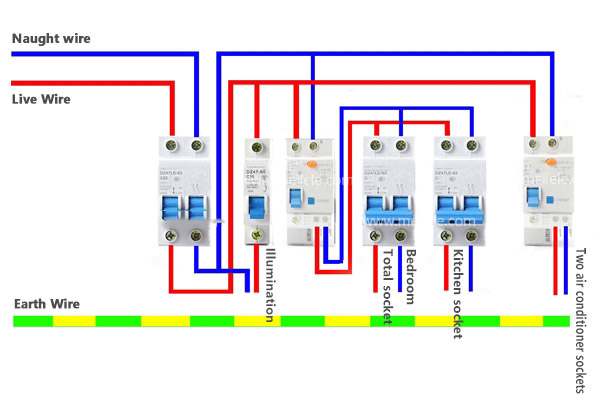
How To Install A Household Circuit Breaker? | Nader Circuit Breaker
Mcb is a mechanical switching device which can carry and break currents under normal circuit conditions and also under specified abnormal conditions, such as overload and short circuit.
:max_bytes(150000):strip_icc()/how-to-wire-an-electrical-panel-1152762-hero-bf8ef4c2d4dd42ed879cbbff2a3ce161.jpg)
Which end of circuit breaker is wire in and out. The function of tripping the circuit was performed by the fuses and switches in earlier days, but there are few disadvantages as follows: The hot(s) and neutral wires should be capped off and laid in the panel somewhere out of the way. There is an arrangement stored potential energy in the operating mechanism of circuit breaker which is released if the switching signal is given to the breaker.
Depending on the kind of circuit breaker you must use, you may have to attach the red hot wire as well. Diyers like you should use this and the national electric code (nec) regulations for efficient circuit breaker sizing calculation. How to install a household circuit breaker nader 14 steps with pictures wiring box bo 101 bob vila replace break it down understanding basics pop up outlets wire wikihow diagram and connection procedure etechnog 1p n solis seminar episode 21 installing ac breakers correctly safety connect new diy family handyman everything you need know about.
Because the hot wire connects to a high energy source, and the neutral wire connects to an electrically neutral source (the earth), there is a. In normal “on” condition of the circuit breaker, these two contacts are physically connected to each other due to applied mechanical pressure on the moving contacts. You have a contained wire, ready for termination under a screw, looping the wire around the screw.
This should be standard operating. But for motorists, it’s still not back to business as usual. Terminating stranded wire on a circuit breaker you could also strip off about 1 of the insulation, pull that off, then strip off about a 1/4 piece of the insulation, and slid that to the end of the wire.
How long to leave the wires? Don't attach even the neutral; Locate the black hot wire and attach it to the back of the circuit breaker.
Long enough so every hot and neutral can reach every breaker space in the panel. Its basic function is to interrupt current flow to protect equipment and to prevent the risk of fire. When a wire is connected to a circuit breaker in an electric panel, the insulation should only be stripped back enough so that, when it is fully inserted in the breaker, no insulation is under the setscrew terminal and no bare wire extends past the side of the breaker.
During the normal operating condition, the arms of the circuit breaker can be opened or closed for a switching and maintenance of the system. One end of the circuit, the hot wire, leads to the power plant. A breaker and wire size chart is an informative table used by engineers and electricians as their guide on the corresponding size of a certain circuit breaker to its copper wires.
A few twists, and a loop, and presto! Ac device that we use in our homes generally have a limit to handle the current and voltage. When a fuse blows out, it takes quite some time to replace it and restore supply to the costumers.
One end of the circuit, the hot wire, leads to the power plant. A switch cannot break the circuit automatically. The other end, called the neutral wire, leads to ground.
12 locate the two sets of. Unlike a fuse, which operates once and then must be replaced, a circuit breaker can be reset to resume normal operation. The racking mechanism is not engaged.
Each breaker is connected to an electrical wire that runs through your house. A circuit breaker is an electrical safety device designed to protect an electrical circuit from damage caused by an overcurrent or short circuit. It will be clearly indicated where this should go.
Neutral can be a live wire in certain edge conditions. When the circuit breaker is closed, the current carrying contacts, called the electrodes, engaged each other under the pressure of a spring. These threshold voltage and current are called the device rating, and are the measurements given by the manufacturers in the range of which the device will work properly.
The power distribution grid delivers electricity from a power plant to your house. Once 52a contact closes (when the circuit breaker closes), the cs can be operated to the trip position. The mcb can provide protection until and unless we have install input power (line) connection and output (load) connections in proper terminals of mcb.
The other end, called the neutral wire, leads to ground. Because the hot wire connects to a high energy source, and the neutral wire. No electrical connections are made at the primary or secondary contacts.
When the connected wiring is at risk of overheating, the solder melts, resulting in the spring extending through the solder, pulling the switch off and shutting down that particular circuit. Inside your house, the electric charge moves in a large circuit, which is composed of many smaller circuits. The electricity that flows through your house runs through the solder.
When the circuit breaker is on, or open, electricity flows out through the circuit wiring to the various devices and appliances served by the circuit and back to the service panel. Breaker and wire size chart. You can attach ground, however.
Indications are provided to indicate the positions of the breaker body. Also called the remove or inspection position. It needs manual operation to break the circuit.
When the circuit breaker is off, or closed, no electricity is supplied to the circuit. This will trip the circuit breaker and open the close/maintain contact with the cs. To trip the circuit breaker open, the trip coil (st) is connected directly between the positive and negative power terminals.
There are two hot wires and both the poles need to be interrupted. When there is a fault, it will intermission just the hot wire. Without a fuse to disrupt the flow of power when too many amps are pushed through a circuit, wires overheat, wire insulation melts and fires break out.