When an air conditioner can keep. An air conditioner isn’t a dehumidifier.
/https://tf-cmsv2-smithsonianmag-media.s3.amazonaws.com/filer/0a/31/0a31b964-654d-4a1c-acc9-2a3af673e91b/gettyimages-96738310.jpg)
The Unexpected History Of The Air Conditioner | At The Smithsonian| Smithsonian Magazine
This is because more powerful air conditioners don’t need to run as much, so they don’t get a chance to remove as much moisture from.

Air conditioning does not reduce humidity. How can you help your air conditioner reduce humidity levels effectively? The dry mode of the air conditioners is considered to be the most optimal choice as it does not leave out all the moisture out of the room. For instance, when it is 70°f, you may not need your air.
Moisture in the indoor air condensates on the cold. Use bathroom and kitchen vents. Refrigerant can absorb and release heat because it easily changes from a liquid to a gas and.
In some cases, mold can grow. An air conditioner both cools the air and makes it drier. Negative air pressure in your space.
An air conditioner can only reduce humidity levels while it is operating. In hot and humid climates you would want to move air at a speed close to 350 cfm per ton. Before you start reducing humidity, find out what humidity you have.
Bathrooms and kitchens are two rooms that can produce a. Many systems are configured to move air at a faster rate than that. Indoor air feels comfortable to most people when both the temperature and the relative humidity are in a certain range.
Florida humidity tends to be high, and your air conditioner has the job of reducing humidity while cooling your home. On the other hand, your air conditioner may not provide enough dehumidifying if you live in a very humid climate. Fill a large bowl with one of these substances and place it.
Too dry conditions can be as. To remove moisture, a faster speed is not ideal. This entry was posted in air conditioning and tagged air conditioning.
Start by checking that the air conditioner is running appropriately by checking that the temperature is dropping normally as the system runs. On particularly humid days, it’s common for cooling systems to be unable to thoroughly reduce indoor humidity. This occurs when hot, moist air in your home comes in contact with the cold evaporator coil.
To the untrained eye, air conditioners cool your home by blowing cool air into it; Verify air conditioner is cooling. Comfort is a relative term but for argument’s sake, suppose that in summer the goal is 74°f with a relative humidity of about 50%.
Adjust the speed of your fan. By reducing humidity levels, one will reduce the strain placed on an air conditioner as air with low humidity levels is less challenging to cool. Here is how ac reduces humidity levels:
Ensure your system is sized properly. Humidity can affect your air conditioning unit if it is too high, so it is important for the humidity to be at the ideal indoor level for your air conditioner to work well and reduce the humidity in your home. Your hvac system has an evaporator coil that condenses water vapor from the air, in a process similar to when condensation appears on the outside of a glass containing a cold beverage.
Set out a bowl filled with alternative dehumidifiers. If your air conditioner’s capacity is much larger than needed, it won’t be able to remove moisture as effectively. Baking soda, laundry detergent, charcoal, and rock salts can all be used to absorb moisture out of the surrounding air.
Indoor ac coils are very cold. That is why you should keep the speed of your fan at the advisable speed. Most people find that humid air is both uncomfortable and bothersome.
The truth is that air conditioners remove the heat and humidity from your living spaces while blowing cool air into it. If you have a humidity problem, we can check your air conditioning system to ensure the quality and condition of the air in your home or business is where it should be. Just because an air conditioner reduces humidity does not mean it won’t benefit the system to run a dehumidifier.
For those asking, yes your air conditioner reduces humidity. That can happen, for example, in a restaurant with a powerful kitchen exhaust system. Over time, problems can begin in your air conditioning system if humidity levels are not controlled.
The result is sticky air that may make your home uncomfortable even if the temperature is lower than it is outdoors. Moisture condenses on indoor coils. If you are noticing your air conditioner working at suboptimal.
In order to overcome the feeling of extra heat indoors during a humid day, an ac must run longer than it would otherwise. Dehumidification helps to keep indoor air at a reasonable humidity level, which helps to keep every member of the family healthy. Acs are able to remove heat and humidity due to the refrigerant in the system.
As mentioned above, the system will work overtime trying to compensate, and may wear down sooner because of this. Hvac humidity control problem #3: Thus, you can be ensured that your room does not get deprived of all the humidity and your skin does not feel dry.
An air conditioner lowers the temperature inside a house, but that’s not the same thing as lowering the humidity. In a nutshell, it means that you are venting too much air from the space. Here are a few ways you can lower the humidity in your home yourself:
Air conditioning relies on a heat transfer process in which refrigerant pumping through the. For instance, the thermostat of your room is at 250 c whereas the room has 90% humidity. The entire process of air conditioning reduces humidity which adds to home comfort during hot humid days.
For example, when it’s 72°f, you may not need to have the ac running to stay comfortable in your house. Voila, a cooler, crisper and cleaner atmosphere throughout the house! Condensed water is expelled outward via a drainage hose, evaporation through the air exhaust hose, or condensation tank.
Common allergy triggers, such as dust mites, mould. If you’re relatively close to the ocean, odds are you will also need a dehumidifier to get a comfortable humidity in your home. In turn, your home’s humidity levels will remain high.
The ideal level of humidity in your home should be between 30 percent to 50 percent, 60 percent, at the most. In particularly humid regions, a dehumidifier is a desirable addition to an hvac system. Negative air pressure is the result of a poorly designed ventilation system.
Most modern hvac systems are capable of regulating humidity. In a nutshell, it helps you all breathe easier. You’ll immediately feel less clammy, less sweaty and less tired, as the air will feel less heavy.
During this process, the air conditioner is also extracting moisture (humidity) from the air which is due to the radiator being cool and creating condensation which drips into a tray and is drained away this is how the moisture and humidity is removed from your environment. Although an air conditioner reduces the temperature inside your home, it is not the same as reducing the humidity. An air conditioning unit would need to run longer than it normally would to overcome the additional feeling of indoor heat.

Faq: Air Conditioning And High Humidity - Greenbuildingadvisor
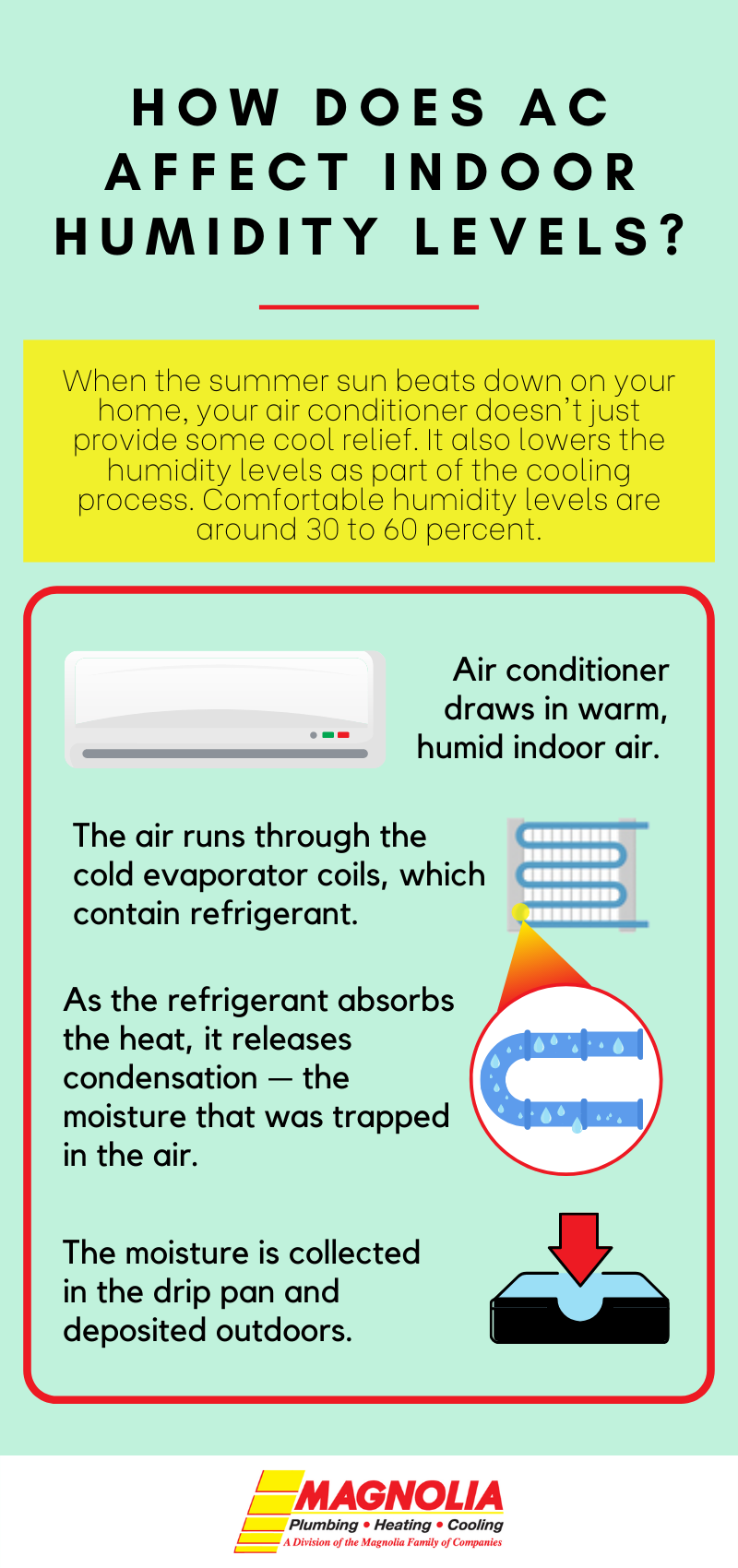
6 No-To-Low Cost Ways To Combat Humidity At Home - Magnolia Companies

Avoid Health Risks From Air Conditioning Overuse

Where Does The Air With High Humidity Inside The Air Conditioned Room Go?(Description)? - Quora

4 Ways To Help Your Ac Lower Humidity | Pv Heating & Air