If it's between your elbow and a finger, it can be painful. This is called ohm's law.

2 .Main Effect Plot For S/N Ratio (Tensile Strength) Vi. Conclusion:... | Download Scientific Diagram
P = v * i.
Amps and volts are a combination of. Apply the conversion formula for dc electricity. The ampere (often shortened to amp) is the unit of electric current. The power p in watts (w) is equal to the squared current i in amps (a) times the resistance r in ohms (ω):
The apparent power equals the product of root mean square voltage and root mean square current. Voltage is a measure of the pressure that allows electrons to flow, while amperage is a measure of the volume of electrons. V = voltage in volts;
Low voltages can’t force very much current through your body. One amp is the current generated when 6. Amps = voltage / ohms (resistance value).
Simply put, amps x volts = watts. The power p in watts (w) is equal to the squared voltage v in volts (v) divided by the resistance r in ohms (ω): Thus it is clear that voltage is the product of the amount of current flowing in a body and its resistance or in other words, current (amps) is the voltage divided by the resistance of the body.
Amps, watts, volts and ohms are units of measurement in a similar way that the metre is a unit for distance. The difference between volts and amps is that amps measure the volume of electrons flowing while volts measure the pressure causing them to flow. One amp is the amount of current produced by a force of one volt acting through the resistance.
Let's say, for example, that we have a circuit with the potential of 1 volt, a current of 1 amp, and resistance of 1 ohm. Current (amps) is determined by voltage, other things being equal. Let's say this represents our tank with a wide hose.
The voltage difference can cause a current under the skin that affects your muscles. Here v is the voltage, ‘i’ is the flow of current in amps, and r is the resistance of the body. It’s actually the combination of voltage and (available) amperage that are dangerous.
Medicine tells us kill levels of electricity are measured not in the voltage that sources the energy, but the current that travels through us. R = resistance in ohms; The voltage drop across the branches must be 6.0 volts to make up the difference between the 24 volt total and the 18.0 volt drop across r 1 and r 4.
A neat analogy to help understand these terms is a system of plumbing pipes. While not a perfect analogy, it provides a simplified view of electricity in a way we can all understand. Watts would be the volume of water coming out of the hose.
In the case of the garden hose, this would be the amount of water flowing. A great analogy of electricity can. Amps and volts combine to create watts, a measurement of the amount of energy being released.
And since human resistance varies hugely, so. Voltage is measured in volts (v) current is measured in amps (a) resistance is measured in ohms (ω) power is measured in watts (w) electrical power, or the wattage of an electrical system, is always equal to the voltage multiplied by the current. A & b are correct;
Specifically, volts and amps would be called va or volt amps, as in the rating of a transformer, but it is loosely referred to as watts. Using ohm's law we can say: [1] in direct current (dc) circuits, this product is equal to the real power [2] in watts.
It is the voltage between two points of your body that causes shock. That killing level current is small, between 100 and 200 ma. The amount of water in the tank is defined as 1.
Amps are the water pressure running through the hose, and volts are the diameter of the hose. Electric current, represented by i, which is measured in amps (a), can be found by dividing power in watts (w) by the volts (v) of voltage. Current through your body is what kills you.
The voltage gain of single tuned amplifier is directly proportional to the amplifier _____. A system of water pipes is often used as an analogy to help people understand how these units of. To illustrate, let me use one of my favorite analogies for electricity:
The voltage is equivalent to the water pressure, the current is equivalent to the flow rate, and the resistance is like the pipe size. A volt is the unit of electric potential difference, or the size of the force that sends the electrons through a circuit. The power p in watts (w) is equal to the voltage v in volts (v) times the current i in amps (a):
In dc theory, volts mulitplied by. Using the equation above, 100v / 1 ohm = 100a. V = i x r = ir.
Also va) is the unit for the apparent power in an electrical circuit. If the current path includes your heart, it can be fatal. Current is a count of the number of electrons flowing through a circuit.
Voltage is measured in volts, current is measured in amps and resistance is measured in ohms. This is represented by the following formula: P = power (watts) v = voltage (volts) i = current (amps) looking back at our example of water flowing through a hose, we can now see how power is directly related to current and voltage using this equation.
Voltage is the force that causes current to flow. If an electrical circuit is a river. Voltage and amperage are two measures of electrical current or flow of electrons.
Assume your motor has a resistance of 1 ohm for this example. To bring together watts (power), amps (current), and volts (voltage), we need one more simple equation. An ampere is the unit used to measure electric current.
W and va are both units of measurement for power, but that’s where the similarity ends. I = current in amps; An electrical current at 1,000 volts is no more deadly than a current at 100 volts, but tiny changes in amperage can mean the difference.
For a fixed resistance, increasing current will increase the voltage. The symbol for amps is a. Current is a measurement of how much charge is moving through a particular point in a unit of time.
Increase your voltage to 120 gives you 120 amps.
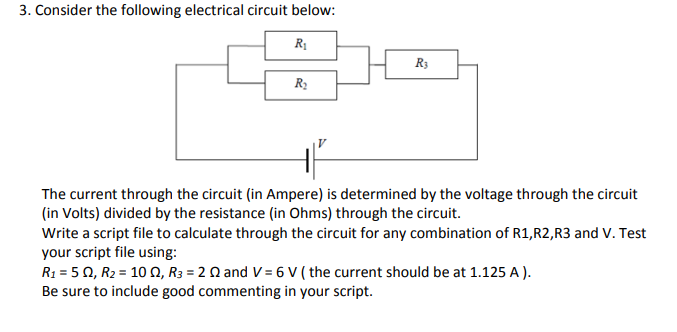
Solved 3. Consider The Following Electrical Circuit Below: R | Chegg.com

Leviton Gfsw1-I Self-Test Gfci Receptacle, Combination With Switch 15 Amp, 125 Volt, 5-15R Nema : Combination With Switch - $32.50 Emi Supply, Inc
Dayton Nema Circuit Breaker Combination Starter: 0 Nema Size, 8 A Amps Ac, 24V Ac, 480V Ac, Key Pad - 21Rk35|21Rk35 - Grainger

Amps To Watts Calculator - The Geek Pub
Eaton Nema Fusible Combination Starter, 250V Ac Max. Motor Voltage, 270 Amps Ac, 208V Ac Coil Volts - 40Z764|Ecn1654Eak-R63/G - Grainger