Ordinary industrial rtds typically drift less than 0.1°c/year. Temperature sensing and control, flow.

Thermistor Temperature Sensor Module Thermal Sensor Module Thermal Sensors Do The Digital Output/Temperature Control Switch — Arduinokuwait.com
Calculate its resistive value at 25 o.
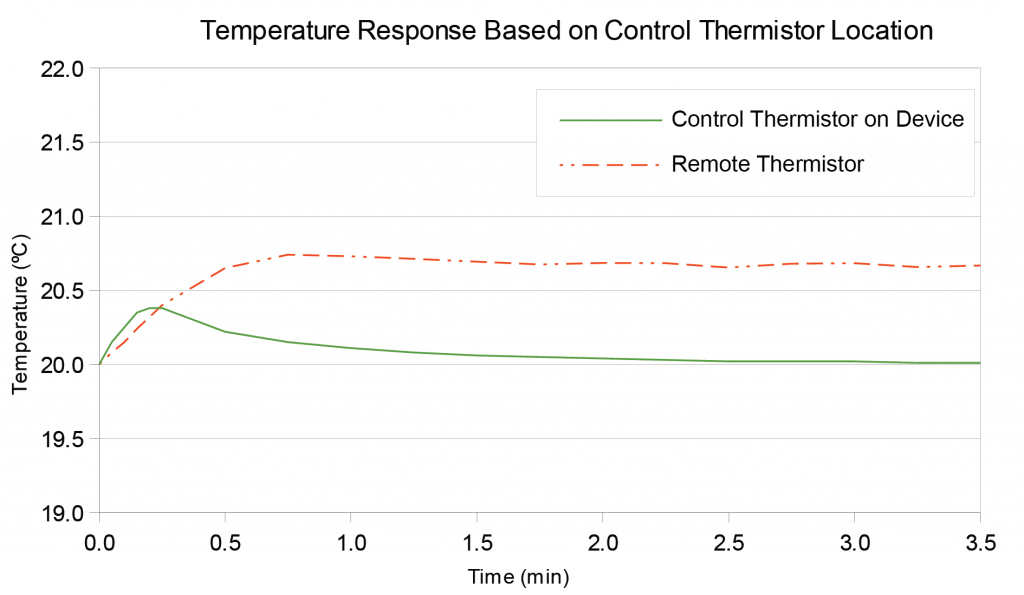
Thermister vs thrmal control. Ptc thermistors are widely used in applications such as fuses and temperature control systems. Therefore a thermistor is a type of resistor whose resistance varies significantly with temperature. While thermistors do not work well in extremely hot or cold temperatures, they are the sensor of choice for many different applications.
If the motor gets to hot, the thermistor relay will trip. Each thermistor is labeled according to its nominal resistance at 25°c; The word thermistor is a portmanteau of thermal and resistor.
The term thermistor is a contraction of the words thermal and resistor. As the thermistor moves further away from the device, users experience greater thermal lag time that negatively affects the accuracy of temperature measurements. A thermistor is a thermally sensitive resistor that exhibits a precise and predictable change in resistance proportional to small changes in body temperature.
Overall, they are typically identified by their resistive capacity at 25℃. Manufacturers typically control this ratio with great accuracy, since it determines how. A thermistor is a type of resistor whose resistance is strongly dependent on temperature, more so than in standard resistors.
T 1 is the first temperature point in kelvin; Thermistors act as a passive component in a circuit. It resists 10,000 ohms of current when the ambient temperature is 25℃.
Thermistors are ideal when a precise temperature reading is required. They are usually made of iron, copper, or alloys of nickel, chromium, tungsten, iridium, and more. Most of them have mineral insulation, and can be customized based on bending.
This can be done by attaching or embedding the thermistor. The voltage drop across an rtd provides a much larger output than a thermocouple. It is critical to have a good grasp of the thermistor and thermostat.
An overload relay must always be used, a thermistor relay is only usefull if you are using the motor in s6 mode (temporary overload). Unlike rtds, thermistors can only monitor a smaller range of temperature. They are an accurate, cheap, and robust way to measure temperature.
Thermistors are divided based on their conduction model. Thermistors are used as temperature sensors. All resistors have some dependency on temperature, which is described by their temperature coefficient.
Apart from the two distinct categories of ntc and ptc, thermistor types differ by curve and range. While some rtds can reach 600°c, thermistors can only measure up to 130°c. How much its resistance will change is dependent upon its unique composition.
A 10kω ntc thermistor has a “b” value of 3455 between the temperature range of 25 o c and 100 o c. A thermistor protection relay uses thermistors which are built inside the motor and measure the temperature of the motor windings. Ptc thermistors are made of doped polycrystalline ceramic on the basis of barium titanate, major material batio3.
The relationship between temperature and resistance is linear for rtds, but for ntc thermistors, it is exponential and can be plotted along a curve. A thermostat only permits the metals to rise above or press upon a contact as temperature changes. In general, a thermostat is a cruder device than a thermistor.
T 2 is the second temperature point in kelvin; Ntc thermistors resistance decreases with temperature rising. These are used for thermal conductivity, as well as in temperature measurement and control applications.
The precise ratio of the composite materials governs their resistance/temperature “curve.”. A ptc thermistor can also be used to control current between two predetermined limits over a wide range of applied voltage and. A thermistor is more complex because it can read changes.
And unlike their active component counterparts. R 2 is the thermistors resistance at temperature t2 in ohms; All the thermistors have 10,000 ohms of resistance at 77°f or 25°c, but they vary greatly the further you get away from 77°f.
In today’s post, we will have a detailed look at. Negative temperature coefficient (ntc) thermistors have less resistance at higher temperatures, while positive temperature. Thermistor a thermistor needs to be placed close to the device, requiring control to guarantee the highest levels of accuracy.
The time taken between change in temperature and the sensor’s output is called response time. Because conductivity is based on the mobility of the electrons in the metal, even tiny changes can be reported in a thermistor. The word thermistor is a portmanteau of thermal and resistor.
A thermistor is a temperature sensitive resistor. Ptc thermistors resistance increases with temperature rising. R 1 is the thermistors resistance at temperature t1 in ohms;
It’s that simple, it is basically a resistor but it’s a special kind of resistors. We’ve already briefly mentioned the common 10k thermistor, for example. Thermistors are part of a larger group of passive components.
A temperature controller monitors the temperature of the thermistor which then instructs a heater or cooler when to turn on or off, in order to maintain the temperature of the sensor (thermistor), as well as the target device. In most cases, the temperature coefficient is minimized, but in the. A thermistor is an amalgamation of two words:
Ptc, abbreviated for positive temperature coefficient. The difference between thermistor and thermostat is that a thermostat is a thermostat, but a thermistor is a resistor whose resistance fluctuates fast and reliably with temperature and can thus be used to detect temperature. Ntc, abbreviated for negative temperature coefficient.
Thermistors are made up of metallic oxides, binders and stabilizers, pressed into wafers and then cut to chip size, left in disc form, or made into another shape. They are often used as a temperature sensor. Platinum and copper rtds produce a more linear response than thermocouples or thermistors.

Jual Ntc 5D-15 5D15 5 Ohm Thermistor Temperature Control Di Lapak Jogjarobotika | Bukalapak
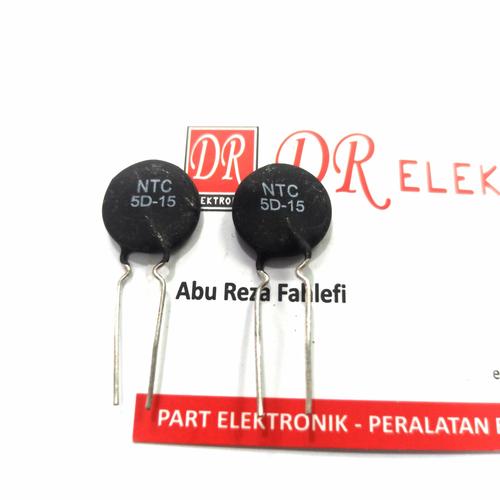
Jual Ntc 5D-15 5Ohm Thermistor 6A 5D15 5 Ohm 15Mm Temperature Control - Kota Depok - Dr Elektronik Depok | Tokopedia
Jual Ntc 10D-25 10D25 10 Ohm Thermistor Temperature Control


Planet Analog - Old-School Analog Temperature Control Circuits Solved With Modern Ltspice Thermistor Dynamic Models, Part One

Thermistor Temperature Sensor Module Thermal Sensor Module Thermal Sensors Do The Digital Output/Temperature Control Switch — Arduinokuwait.com